

4 Key Elements of the Market Research

Are you aware of how big the market research market is?
It’s approximately $150 billion, according to a report from 2025, which shows the potential of this market to substantially scale up and how data-driven decisions are gaining recognition.
So! What is this market research that businesses are insanely falling for? Let’s introduce you to this concept.
What Is Market Research?
Imagine a case where you want to open a coffee shop. Before investing, you come across the data of intended people and their preferences. Furthermore, you check the nearby competitors and also figure out the busiest times for your coffee lovers. This discovery is actually market research.
In a nutshell, market research is a data-driven, smart way of making decisions, like offering desirable menus or products at the price that is just right for your ideal audience. Overall, this research provides insights into your audiences’ intentions, requirements, and preferences. Once discovered, you can stand out from the competition by offering what they like. It’s a driver process that can get a business up and running.
So, what’s in it that makes it a must-have for businesses? These are its elements. Let’s understand its four main elements below:
Important Parts of Market Research Every Business Must Focus On
Market research is conducted for a reason. And if the cause is commercial, it is necessary to understand what components make it a must to go with.
1. Setting Clear Objectives (Why Most Research Fails Without Them)
In the beginning, thoroughly brainstorm what you expect from this research. The deep analysis will clear all confusion and introduce you to the ultimate objective. Businesses typically switch to market research with these objectives:
- Discovering a target audience with the potential to convert into customers.
- Understanding market trends, covering existing and potential trends.
- How long the product is going to sustain, and what opportunities are in the market.
Let’s say a startup company wants to launch a new AI-driven chatbot for automating assistance to customers. Market research can get insights into every perspective that it wants, like who to start targeting. Additionally, the research can let you think of the purpose as why you want to go with a specific idea, who is going to be influenced, and what you should expect in the end.
An openAI Sora was launched after in-depth market research on the target audience, which is non-tech-savvy entrepreneurs. It tailored its products so that non-technical professionals can use them without facing challenges.
2. Mastering Data Collection—Choosing the Right Fuel for Your Business
Moving to the next element, data collection is crucial. It is actually a foundation of the whole research, which provides the fuel for final decisions. These are raw pieces of information that are further used for analysis. Coming to the point of digging out data, the relevant data can be gathered using two different sources, which are:
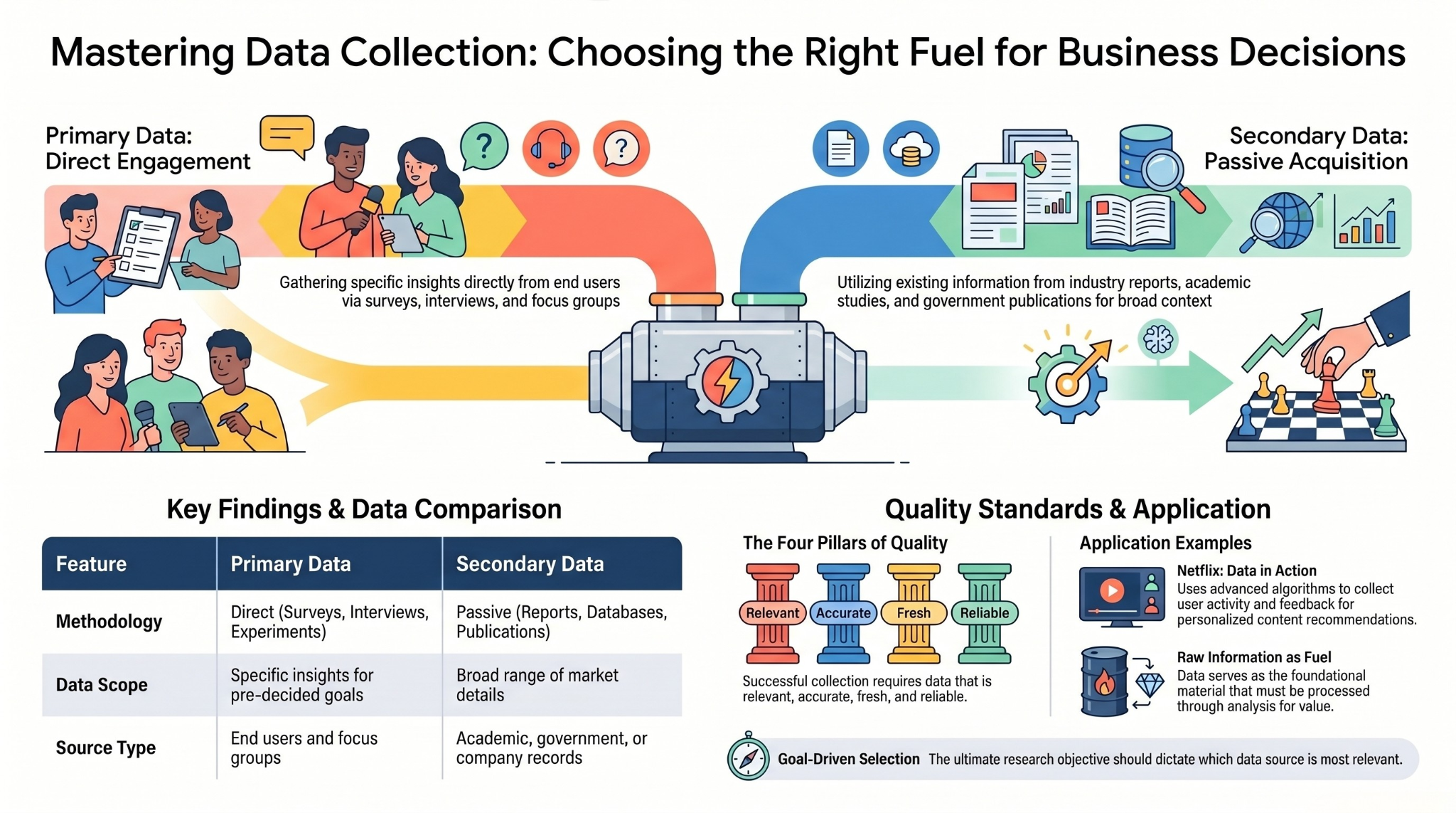

- Primary Data: Being primary, this source is a direct method of gathering data from end users. For this purpose, researchers run surveys, conduct interviews, interact with focus groups, and even experiment. These methods help in extracting specific insights into data that resonate with a pre-decided goal/objective.
- Secondary Data: This method involves passive sources of information, which can be industry reports, academic studies, government publications, or company databases. These pieces of information consist of a broader range of market details.
Whichever method you choose, the collection should be relevant, accurate, fresh, and reliable. This is where you win your selection of the right tools and methods. Again, your goal is crucial because it eventually guides you to select the best source of research resonating with your ultimate objective.
Let’s consider the case of Netflix. This platform of streaming series uses advanced data collection methods because its target audiences are streaming lovers. And the widespread use of smart devices makes it easy to use advanced algorithms for collecting user activity and feedback data. Eventually, the insights into this collection reveal preferences of and recommendations for a particular user.
3. From Raw Data to Action—How to Spot Winning Trends
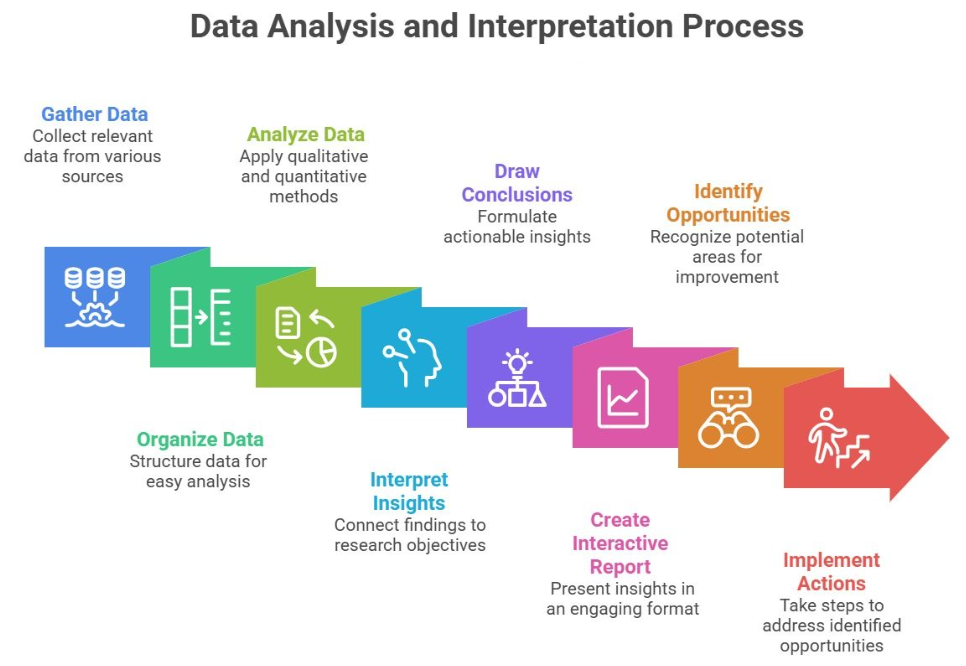
 Now that the data is gathered, the next element to focus on is analysis and interpretation. You can interact with insights once you analyse the collected records. The clear understanding of insights triggers the possibility to express these pieces of information in an interactive report. To create it, organise data by housing all key and relational records. The structured data makes it easy to identify opportunities. It can introduce you to the voice of data as to what it indicates. Accordingly, draw conclusions.
As the insights are ready to grasp, utilise these key techniques for data analysis:
- Qualitative Analysis: This type of analysis aims at understanding customer opinions, motivations, and their behaviours. Certainly, it requires relevant data, which can be revealed through open-ended data, such as interviews and surveys that it consists of.
- Quantitative Analysis: This type of analysis requires numerical data, which can be sales figures or poll results. Data analysts use different methods, like standard deviation, to figure out final findings.
The interpretation process connects the findings to the research objective, ensuring the insights are actionable. For instance, identifying a decline in customer satisfaction through survey results may prompt a business to revamp its service offerings.
The success of the market research services lies in actionable insights. If the identified pattern resonates with customers’ preferences, it is successful done. Amazon does it to discover purchasing patterns and offer personalized recommendations so that customers can stay connected and satisfied with a personalized experience.
4. The Final Blueprint—Turning Reports into Real-World Results
The final element is the reporting. These driven conclusions can be easily converted into comprehensive visuals. Employ AI tools like Talend or Power BI to present visualised details. The market research report includes all comprehensive aspects, which are given below:
- Summary of Findings in reports: These findings can be key insights or trends that were analysed to be trending.
- Data Visualisations: This is typically related to preparing an interactive report that amplifies insights. This can be easily done through charts, graphs, and infographics. So, the complex insights can be visualised to make it comprehensive.
- Recommendations: Finally comes the time to define actionable steps. Understand findings and then define possible recommendations. Be focused during this step because it is going to attract expected goals.
- Methodology: Maintain a record of how the data was collected for your marketing research, covering everything from discovering sources to gathering vital niche data.
- Insights and Trends: Record a detailed overview of the journey to reach desirable results.
Overall, the findings will help in launching a new product or revising existing pricing strategies. Moreover, you can target new customers for upselling because these findings in a well-structured report carry features of marketing research, which translates into data-driven decisions. With clear visuals and actionable ideas, success is easy to achieve.
Coca-Cola Company, for example, invests in market research to come across findings that can help in designing campaigns. These campaigns prove significantly beneficial in targeting specific demographics.
Pro Tip: When finally applying findings, categorize your report by demographic. This segmented report helps your marketing team to get insights into how to personalize campaigns instantly.
The DNA of High-Quality Research: 5 Key Features You Can’t Ignore
As aforesaid, some common features are noticeable to produce high‑quality market research. Let’s interact with these valuable features here:
- Systematic: Every action or step that is likely to be implemented should be planned priorly.
- Objective: The marketing research prevents biased decisions and avoids personal opinions.
- Reliable: The decisions or strategies should be driven by clean and accurate niche data.
- Relevant: Collect data for findings that resonate with how to solve a specific business problem.
- Actionable: The finding will certainly reveal something that can be worth recommending.
Where to Dig? 5 High-Impact Areas to Grow Your Brand
Well, market research touches multiple areas that reveal opportunities or prospects for businesses.
- Customer Research: With a crystal-clear understanding of customers’ behaviour, demographics, and preferences, the market can be analysed effortlessly.
- Competitive Analysis: This is to add cutting-edge to your strategies by adding the strategies that are the strengths of your competitors and are indeed proven to bring results. However, weakness can also be revealed, which clarifies where to emphasise more.
- Product Research: Whatever you are likely to launch, like products, concepts, features, or update pricing, prefer testing them before.
- Brand Analysis: Evaluate your brand value and position in the market.
- Market Segmentation: To attract success, ensure that you know the distinct groups in the target market.
Collectively, these areas symbolise the parts of market research. With these parts, challenges can be observed from different angles.
The Real Impact: How Industry Giants Use These Elements to Win
Global businesses admire various components of market research, especially when it is done right. These components can be leveraged to:
- Minimize risks by considering validated ideas before finally investing in its implementation.
- Deeply understand your competitors and their distinctive strategies and offerings.
- Explore and identify new market segments and opportunities.
- Focus on satisfying customers by catering for offers that they expect.
Transform raw data into winning strategies with expert-driven market research solutions.
Conclusion
Ideally, the four market research elements are interconnected. Which of these four elements do you find most challenging to implement in your current workflow for market research? Let us know in the comments or reach out for a consultation.
The aforesaid elements together deliver a comprehensive report that can help in achieving expected results that can be consulted with a leading market research company or expert. Every component of marketing research reveals a true picture of the market environment. With a clearly defined objective, the research yields outstanding results. On the flip side, inaccurate or incomplete data collection can never let you access reliable insights. Eventually, the result is misinterpreted. Overall, the four key elements of market research help in addressing these components systematically. Companies make informed decisions on its basis.


Post Comment
Your email address will not be published. Required fields are marked *